About a year ago I came across an article entitled ‘Why Being Creative is Good for You’. Among other things, it mentioned a very interesting exercise called ‘morning pages’, which consists in writing three pages of stream of consciousness on waking up. Obviously, creativity is not just about writing, fine arts or the performing arts – something that probably comes to mind first when we say the word. Creativity is about very diverse activities, such as cooking. I talked about a love of baking with a friend the other day (the friend who treated me to one of her most delicious blueberry cake pops last week), and we agreed that it’s a hobby that can help you go through the hardest of times. Food in general seems to be not only an outlet, but also a universal source of inspiration. One of my favourite film directors Federico Fellini is believed to have said: ‘La vita è una combinazione di magia e pasta’ (life is a combination of magic and pasta). This quote somehow connects with a plate I spotted on the wall in a little coffee shop in Bodrum last summer. It said: ‘life is a kitchen, put on your prettiest apron and whip up something incredible’, using a kitchen as a metaphor for life. Clearly, living itself is a creative process, for life is a balance between chance and choice. Some things are inevitable – as for others, we decide ourselves whether to make them happen or not.
Speaking of connections (and, according to the above-mentioned article, the ability to see them is a sign of a creative mind), the process of choosing from the myriad options that life offers us day after day makes me think of a poem by Boris Pasternak whose title can be translated as ‘It is not Seemly to be Famous…’. It discusses creativity in the broadest sense, and some of the lines, in turn, remind me of ideas expressed by other prominent thinkers: of Albert Einstein’s phrase ‘Strive not to be a success, but rather to be of value’, of Rudyard Kipling’s poem ‘If–‘, of Jack London’s beautiful words on the subject of life (which were read out by M in the final scene of the last James Bond film No Time to Die). It also reminds me of another poem by Pasternak whose first lines can be translated as follows: ‘in everything I seek to grasp the fundamentals’. My philosophy teacher would quote them in relation to our innate desire for knowledge and truth. Interestingly, towards the end Pasternak compares writing poems to gardening, which is another example of a creative activity. By the way, Kipling has a whole poem called ‘The Glory of the Garden’. I learnt about it from the video series on the English gardening tradition which I watched with my second-year students last year and which at the time reminded me that teaching can be a very creative process too.
10/12/2021
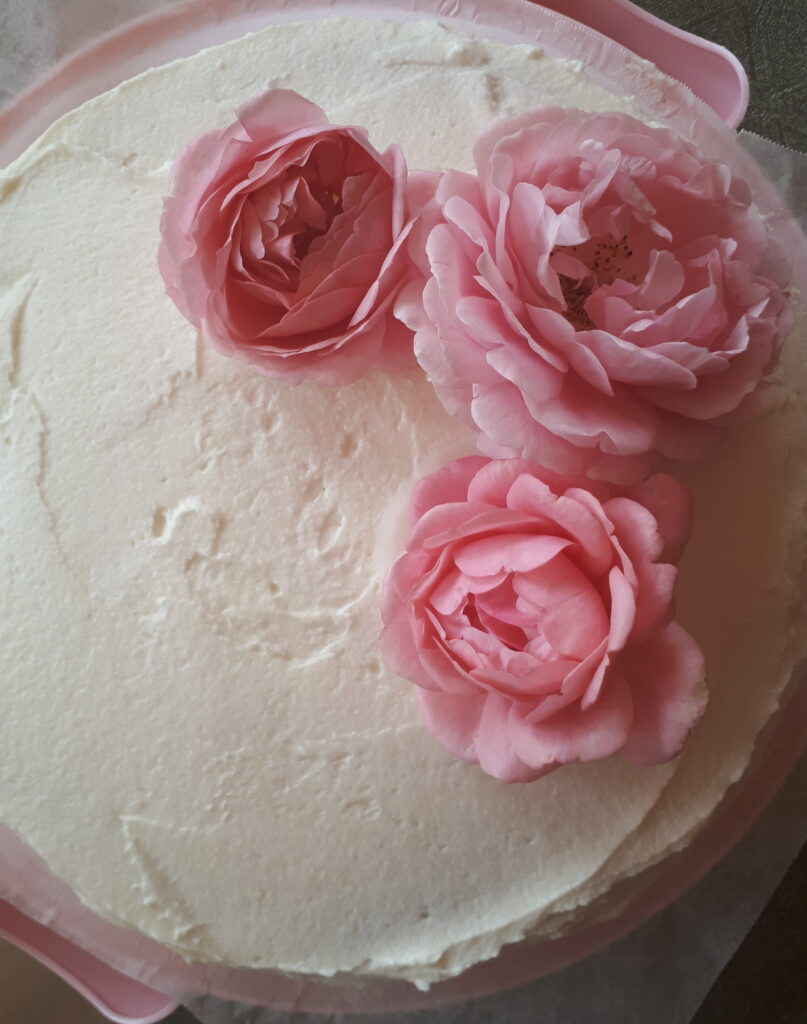
/Cake made by me in 2019/