One chilly evening in early January we went to see Krasnaya Street, which in Königsberg’s times bore the name Schrötterstraße and was located in a suburban quarter called Amalienau. Soon after we turned into it, I spotted a very nice-looking little café on the ground floor of one of the old apartment houses. The sign above the entrance read ‘Gustav Grossmann’.
Most of the German buildings were destroyed during World War II but some remained, including the house where a merchant named Gustav Grossmann used to live and keep a shop selling tea, coffee, chocolate and marzipan, among other groceries. Eleven years ago they launched a museum in his former flat – and this was the café that opened several years later next door, right where the shop used to be.
The light was shining welcomingly through the big window, but we went on. It was getting dark, and as we walked down the almost empty street we saw various other German buildings – blocks of flats as well as detached houses, many of them with New Year and Christmas lights and decorations. On our way back, passing by the café again, we thought we’d drop in to have a look.
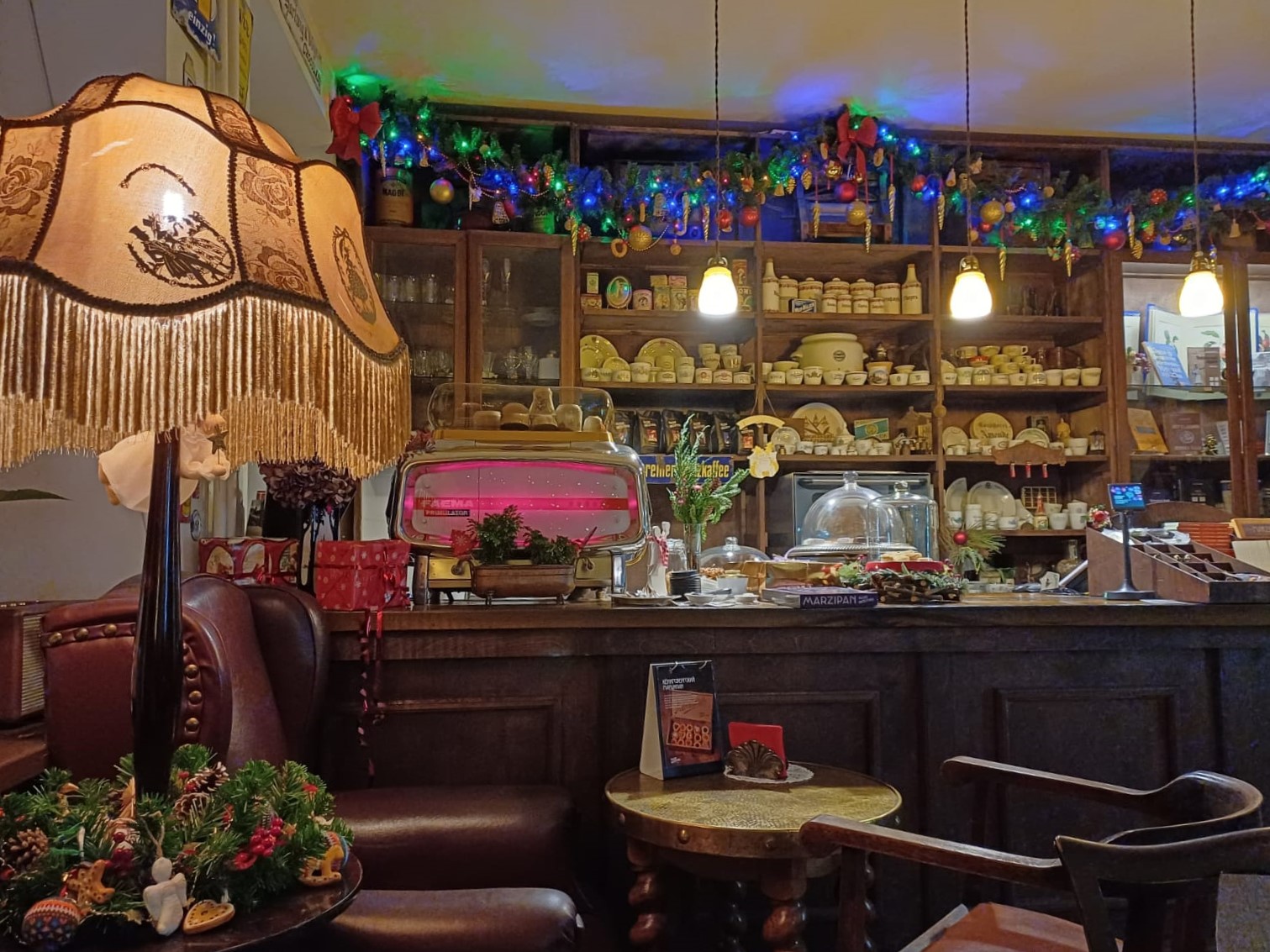
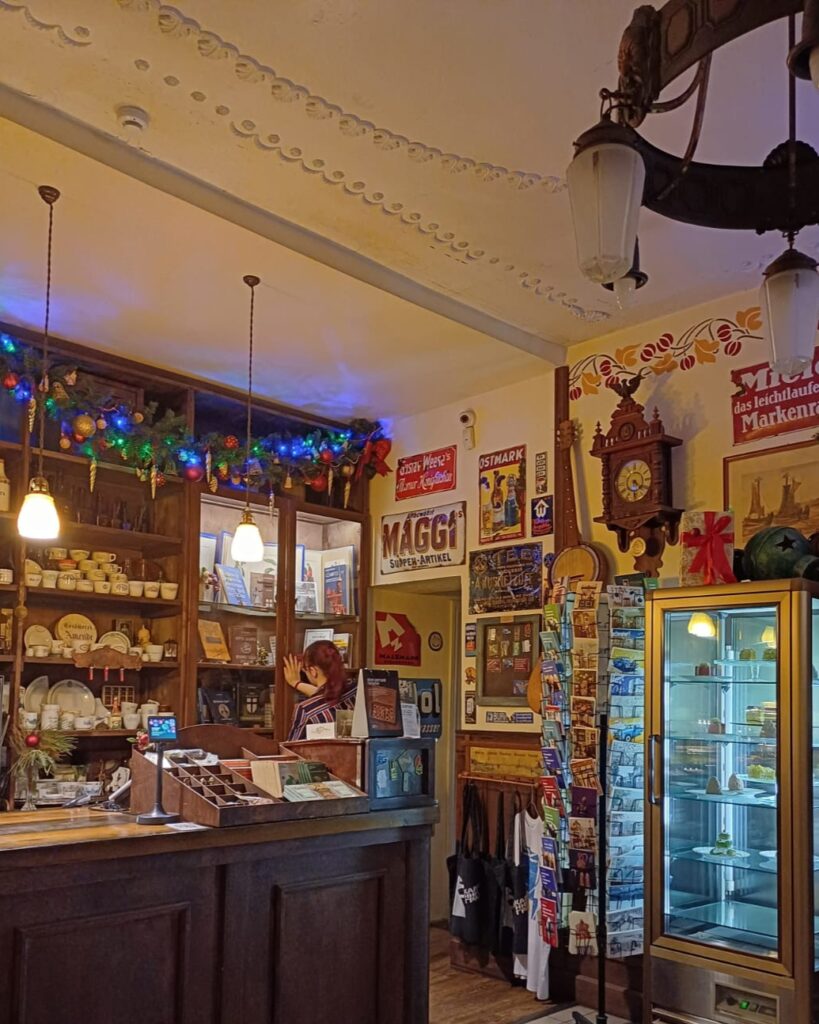
As we walked through the door, we were instantly drawn by the atmosphere. Dim light, soft music, beautiful antique furniture, lamps and crockery the room was filled with – it was smart and relaxed at the same time. Two women sat at a small table by the window, immersed in quiet conversation. Apart from them, we were the only visitors – probably just because it was Sunday and the museum was closed, as we discovered later.
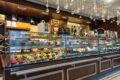
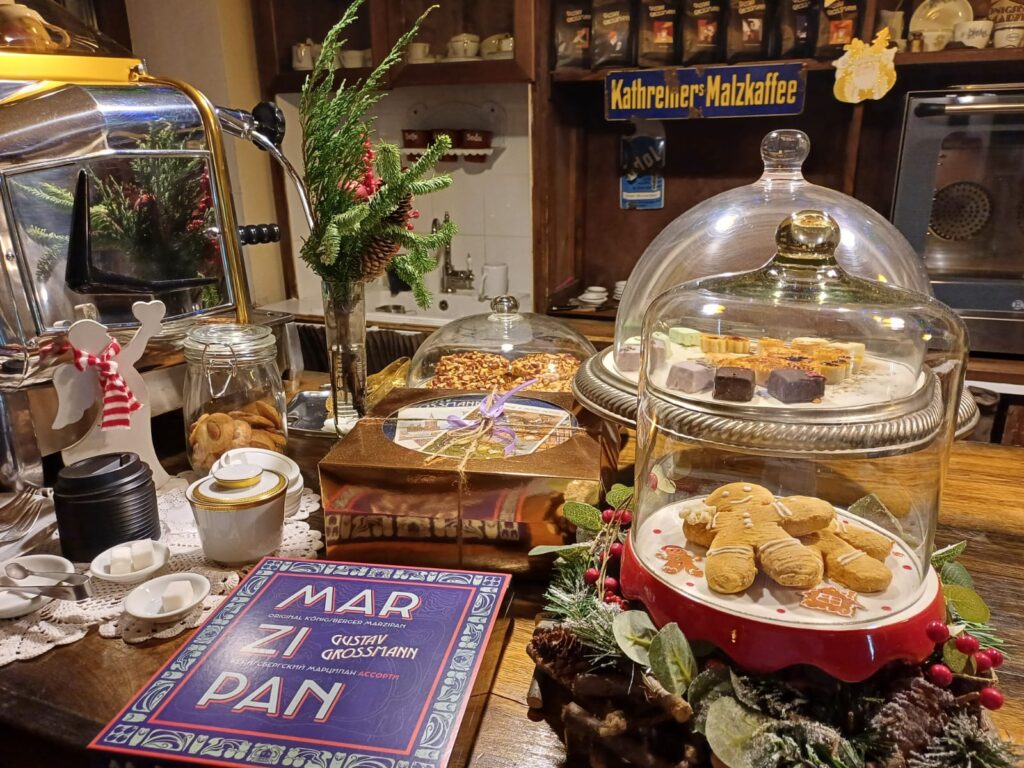
So we got the big table and positioned ourselves on the sofa behind it – a perfect place to soak up the atmosphere, study old plates and pictures that cover the walls, and gaze at the ornate ceiling, which they apparently uncovered during the recent renovation. And to our left was the counter with neatly arranged marzipan, their speciality, and some other sweets and biscuits.
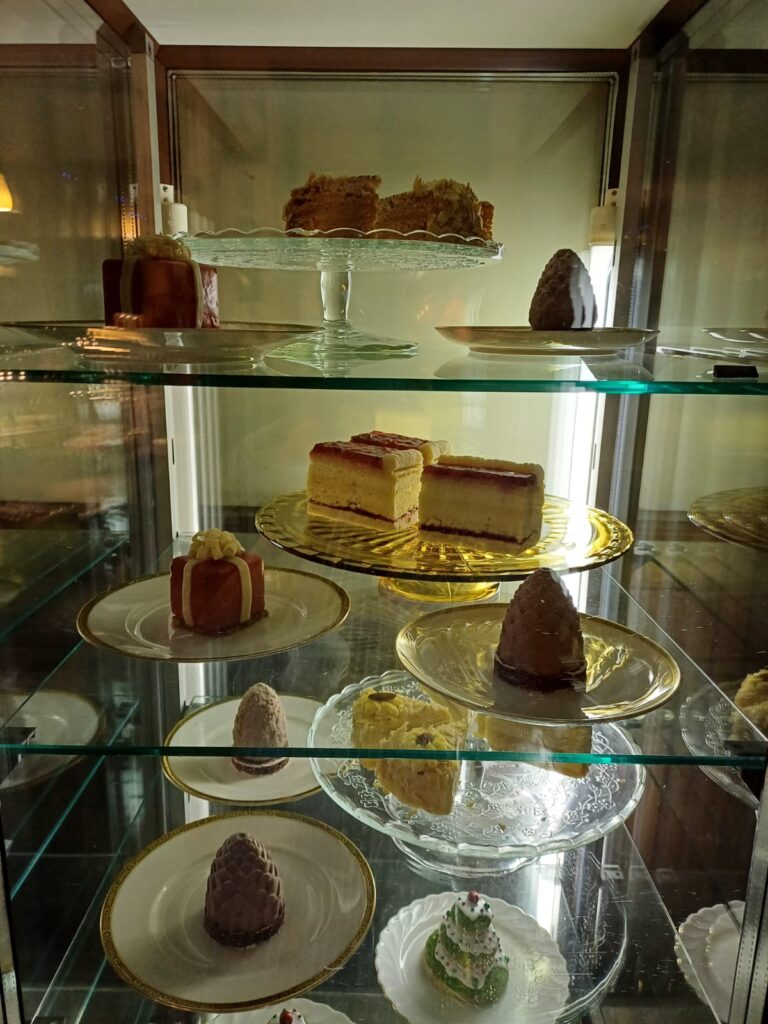
Now Königsberg was famous for its marzipan and there were numerous shops and cafés that sold it. The citizens of contemporary Kaliningrad seem to have retraced those old local recipes, according to which marzipan is flavoured with rose water, shaped into hearts, baked, and then decorated with things like candied fruit. At Gustav Grossmann they serve it with tea or coffee and sell it in boxes to take away as a souvenir. I got a tiny flower-shaped marzipan with spiced cherry filling, but they also have blackcurrant, pumpkin and salted caramel options.
A welcoming young lady at the counter told me about the cakes on display as well. One is called Louise, or Luisentorte, after the queen of Prussia, and is made to a 1914 recipe. The lady added that they have a portrait of the queen’s great-granddaughter on one of the walls. Coincidentally, the former Queen Louise Memorial Church, or Luisenkirche, which now hosts a puppet theatre, is just a few minutes’ walk from the café. Following the recommendation, I went for the almond cake, another one of their specialities, made to an 1878 recipe, and it proved perfect.
The cake and the marzipan long gone, we just sat there on the sofa, looking around, enjoying the peace and quiet, not feeling like going anywhere. At one point a pleasant familiar jazz melody started playing, and it turned out to have featured in Woody Allen’s Midnight in Paris, which felt very fitting. But the café was closing soon, and so it was time to get into the cold again, take a short walk to the puppet theatre and catch the tram, all the way to Frunze street.
/Pictures taken on 5 January 2025 by me/